All construction sites, big or small comes with its own set of headaches when lifting and moving materials around. Scaffolding everywhere, awkward or delicate loads to be taken to high levels, moving multiple smaller items or fluid materials; add to that, that there never seems to be enough hours in the day to complete on schedule and problems quickly arise.
We regularly get approached from construction companies and smaller builders with questions about what they could use to lift specific items in a particular way whilst keeping costs down and improving productivity. Workers safety is another big concern for construction businesses.
This case study looks at some of the core challenges one of our customers faces during a building operation and the options we suggest. They were keen to upgrade their existing ageing equipment to expand their business in order to take on larger contracts, and were looking for ways to speed up their material handling in a safe but less labour intensive way.
Choosing the right equipment from the get go can transform a slow, labour intensive process into a smooth and efficient operation.
During discussions our customer explained some issues they had with moving common materials around on site and asked if there were any easier or new ways to lift them to limit workers physical strain whilst speeding up the process. Time is money!
Mortar and bricks could become more problematic as the height of the build increased. They also came across issues when trying to install finishing touches to the build including handling plasterboard, lifting radiators to higher levels, getting solar panels to the roof tops were key issues.
Storing and handling smaller tools such as hand tools, scaffold fittings, screws, nails and other small fittings also needed to be addressed.
Getting these items where they need to go can be challenging; imagine carrying large buckets of heavy mortar, scaffold fittings, bricks or other large items up to high levels with only a simple ladder! Extremely hazardous and physically demanding.
This is why the majority of building sites incorporate scaffolding towers when the build reaches the second floor level.
Even putting up scaffold tower can prove a challenge especially as the height increases, but once in place they can be used in many ways to help raise your materials.
We evaluated some of the potential lifting solutions to address some of the lifting constraints faced on a daily basis by our customer, and compiled some information to help with their selection of new equipment. Next you will find some information on the products we recommended to our customer and the outcome.
Lifting loads correctly with the right equipment will reduce much physical stress on workers whilst lifting the standard of safety and increasing productivity.
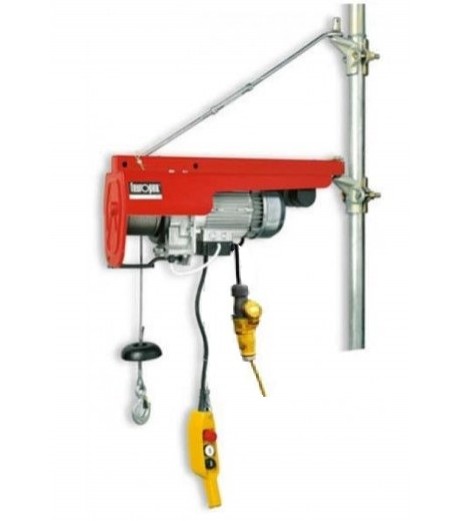
Scaffold hoists are one of the most asked for pieces of equipment for material handling on site. They attach neatly onto a scaffold pole at any level you require and using their electric power lifting loads become quick, easy and so much safer when used the correct way. Protruding over the edge of the scaffold the load is attached to the wire rope and load hook and lifted up the outside of the building, at the top it can be swung in to remove the load.
Another type of scaffold hoist like the L'Europea HG200 operates like a winch from ground level with the load hook fitting through a pulley system at the top of the scaffold; this system removes the need to carry the hoist to the top in the first place.
These hoists can be repositioned pretty quickly as required throughout the build, so as long as scaffolding is present the hoist can be used anywhere.
Scaffold hoists are only part of the story; there are many different types of accessories which further enhance the hoist performance. Using the right accessory for various materials and loads is paramount to optimising performance levels.
Now let us examine some of the commonly chosen equipment to work with a scaffold hoist and different load types.
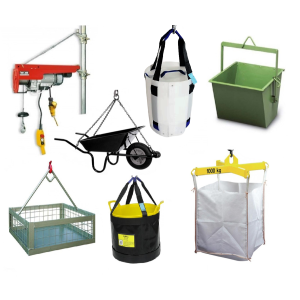
There are numerous modern lifting accessories available today which can quickly transform how loads are transported on site. Lifting bags come in a variety of formats to suit different loads and provide a safe way of transporting and lifting a range of load types from solar panels and mortar to gas bottles, tools and loose materials. We can also offer more traditional methods to work in tandem with a scaffold hoist.
Let us now evaluate some of the products we recommend for particular load types.
There are a number of more traditional products available to work in unison with scaffold hoists and have been specifically designed for this scenario.
Our most popular items are:
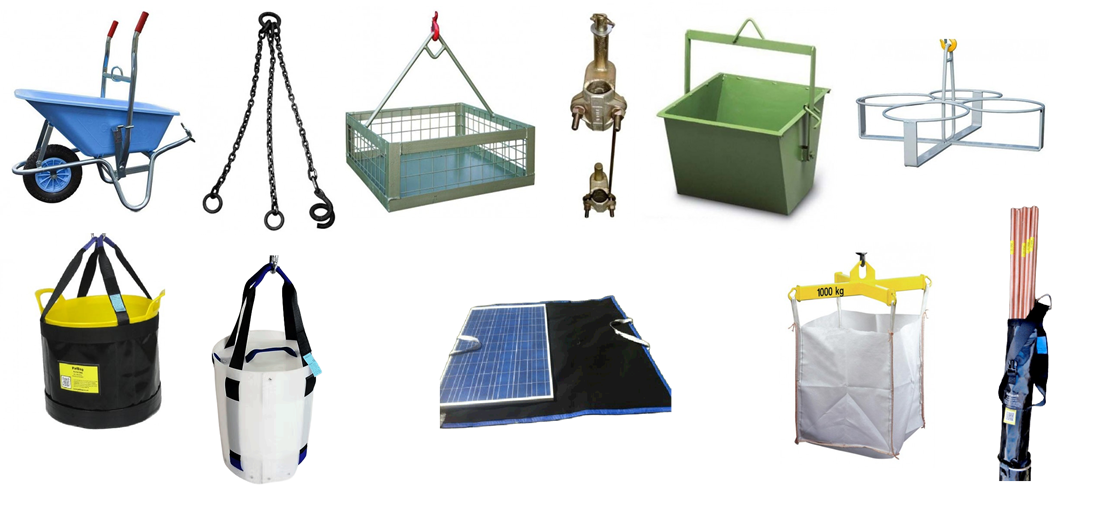
Made from Heavy duty, high performance technical materials such as PVC and high density polyethylene All built in webbing slings conform to the necessary standards.
Bulk lifting bags or FIBC (flexible intermediate bulk container) bags as they are also known are huge woven polypropylene bags with handles or straps at the top for lifting. These are typically used for bulk aggregates like sand or alternatively for waste.
When loaded these large bags can be heavy and awkward to handle which is where our bulk bag handlers come in. A special cross shaped framework with bag handle recesses at each end are ideal for lifting these bags. The central loading eye can be quickly attached to a scaffold hoist or other crane to lift and lower the loaded bag as necessary.
This set up creates a simple solution for lifting loose materials with minimal physical effort, thus more protection from physical injury for the user.
The format for lifting buckets easily is a bucket lifting bag. This method provides a secure way to lift loaded buckets to where you need them. Simply place your bucket or trug into the bag and when loaded the sling straps incorporated into the bag can be attached to the scaffold hoist's loading hook. One big advantage to this type is that the bucket will remain stable thanks to the rigid base and sling straps, removing the risk of contents spilling out during lifting.
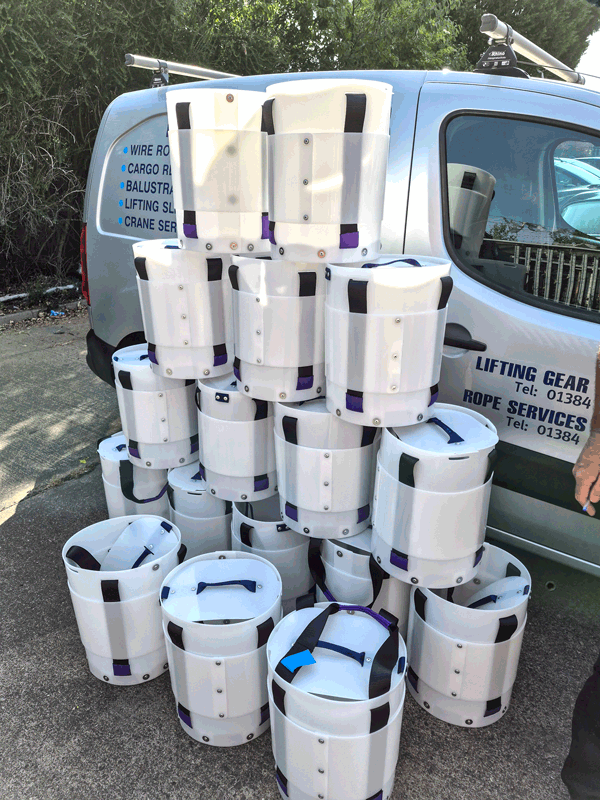
Another type of bucket bag is a harder, semi-rigid formed plastic type container with an integrated lifting sling and a lid to help contain the contents. These are ideal for scaffold fittings as well as sharp objects as they can't pierce through like they can with a soft bag. They take up more space than the soft bucket lifting bag.
These heavy duty lifting bags are long and slim with an incorporated lifting sling and additional boot at the bottom for extra strength. Pole lifting bags are ideal for transporting multiple scaffold poles, metal pipes, wood battens or other similar objects. These bags come in 2 capacities – 16 litre and 20 litre and can both handle loads up to 75kg.
Just think of how many poles you can transport in one go without many repeated trips along with their hazards! Using these bags is a sure fire way to maximise productivity whilst minimising hazards and injuries.
Our customer was impressed by the range of material handling solutions we suggested to help their business. After careful evaluation of top priorities and a cost assessment the client subsequently purchased 2 L'europea scaffold hoists, a couple of brick baskets, 4 bucket lifting bags, a set of wheelbarrow chains, 2 tipping buckets and a couple of the hard plastic type fittings buckets along with half a dozen webbing slings and a solar panel lifting bag.
This was just for starters to see how they got on with the equipment and the quantity required on their next building project. They were quite keen on the lifting bag side of things for their practicality and easier, space saving storage.
Our customer was impressed by his lifting equipment choice with the scaffold hoists bringing big benefits all around. When used with the other accessories they purchased material handling became quicker and easier, and with happier workers the atmosphere on site changed for the better.
They were impressed by the different types of lifting bags they ordered and were all put to efficient use, it didn't matter when the bucket handle broke again! Simply pop it into a bucket bag and away you go! Scaffold fittings didn't get lost now they were in their special lifting bags and they made huge gains with the solar panel bag which was also used to lift radiators, small windows and even boarding sheets.
The customer is now exploring other types of lifting bags and scaffold hoist accessories for the future.
When looking at all the different options available it is obvious that there is no one size fits all. There are many things to consider when deciding on your set up. Site layout, materials to be lifted, maximum capacity required, lifting reach, equipment fitting, size of load.
Take time to assess your construction site needs and what is most important. Compare products to understand how they are used and potential limitations in order to make smart choices.
Choosing the right product or combination of equipment can see real benefits including faster, safer lifting, fewer injuries, less material damage and ultimately a building project that stays closer to schedule and budget.