A chain sling is perfect or those who require an extra level of versatility in industrial settings when lifting heavy items. The selection of chain slings offered at Lifting Gear Direct will suit most needs. Chain configurations include single leg, double leg, 3 leg and 4 leg options. They are available with a choice of connectors and fittings of your choice.
The advantage of becoming a customer of Lifting Gear Direct and ordering from us is that we have extensive experience of adjusting the equipment we supply according to requests issued by customers.
Other chain options include endless slings and stainless steel chain. Our full collection also includes webbing, round and one way slings.
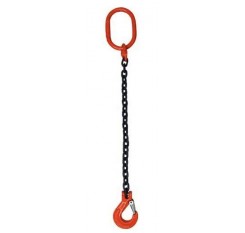
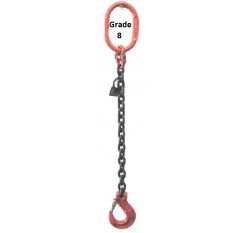
£43.65
About Grade 8 Single Leg Chain Slings Part of our chain sling line u..
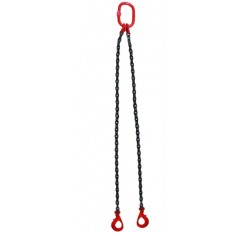
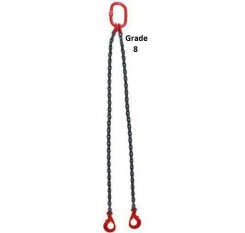
£76.55
About the Grade 8 Double Leg Chain Sling Packing a pair of legs rather tha..
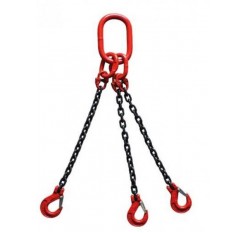
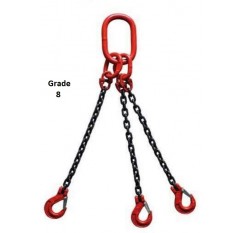
£143.71
About the Grade 8 3 Leg Chain Sling With not one, not two but 3 sepa..
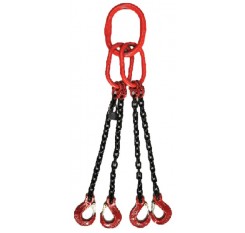
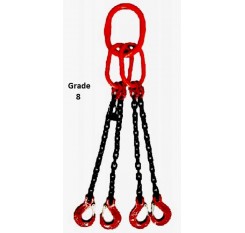
£176.33
About the 4 Leg Chain Sling in Grade 8 Chain slings from Lifti..
POA
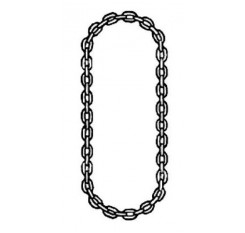
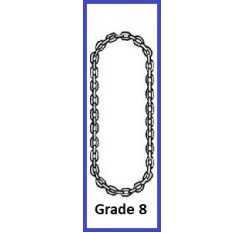
About the Endless Chain Sling Grade 8 In addition to supplying chain..
£41.75
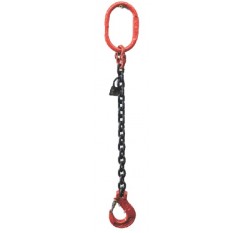
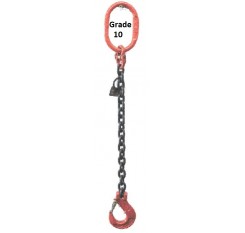
About the Grade 10 Single Leg Chain Sling Suitable for lifting lighte..
£72.56
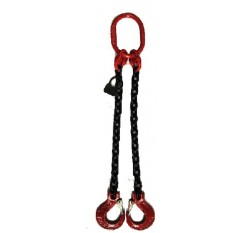
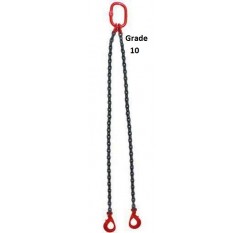
About the Grade 10 Double Leg Chain Sling Amongst our large line up ..
£119.22
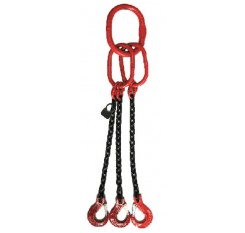
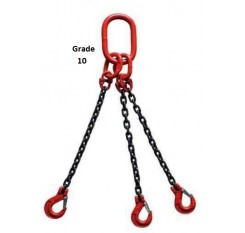
About the 3 Leg Chain Sling Grade 10 We produce and supply custom li..
£150.89
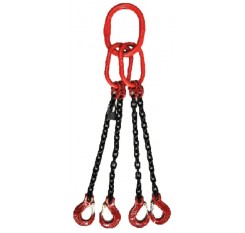
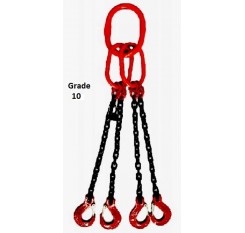
About the 4 Leg Chain Sling grade 10 Fashioned from high quality gra..
POA
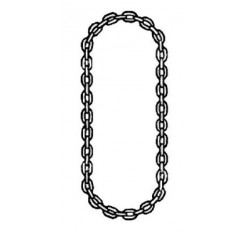
About the Endless chain sling Grade 10 For an endless design chain sling, this ..
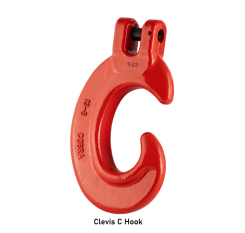
£35.82
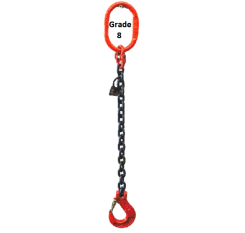
About Cobra Single Leg Chain Sling Grade 8 These chain clings are made up for..
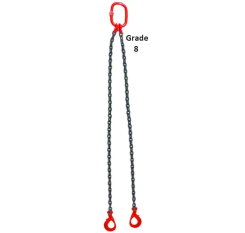
£60.64
Cobra 2 Leg Chain Sling Grade 8 Information The short link chain used in thes..


Employing the use of grade eight and grade ten steel, the user can be assured that only the safest platforms are offered through our services. As we appreciate that there is no such concept as "one size fits all" a number of selections are offered.
Currently, these lifting chains are available in models of up to four individual chains per sling. This will allow for more attachment points and therefore, higher levels of control. Additionally, we can also fit shortening grab hooks to each leg to adjust the chain length.
Our standard grade 8 and 10 chain slings are made up from European G8 and G10 chain and components. The grade 8 slings conform to BS EN 818-2 with certificates 2.1 / 3.1 /DoC (declaration of conformity) available.
The European grade 10 chain slings meet BS EN 818-2 requirements and exceeds them by a further 25%. 2.1 & DoC certification available.
We now also supply the full range of Cobra chain slings in grade 80 and the Cobra plus in grade 10. Cobra G80 meets BS EN 818-2 WLL performance requirements with 2.1 & DoC certs available. The Cobra Plus g10 slings also meet these standards however they exceed them by a further 25%, thus the additional 3.1 certificates are available.
Cobra slings can be made up to suit your lifting tasks with multiple options for chain sizes and lengths as well as a good choice of chain components to match your chosen chain. View each type of Cobra chain sling on their individual pages to find out all the pertinent details.
You can find lots of big brands represented across the different equipment categories on our site, and our chain line up is no different.
Whether you are looking for components from Gunnebo, Thiele, Cartec or Pewag, you can take your pick from these and many other major names in the shop by brand category or under lifting chains. This should give you confidence in the quality of the chain and components you order from us.
On this page you will find our own Lifting Gear Direct chain slings which are made up to order to your needs.
Chain can be adapted with components and accessories to make your perfect slinging accessory. All you need to do is ask us and we will endeavour to make up a suitable sling. You can choose from a single leg, double leg, 3 leg or 4 leg set up as well as an endless chain. You can purchase them online with choices for the safe working load, length, end fitting and whether shortening grabs are required. If you can't see the exact specification you need then just give us a call. Bespoke chain slinging products can be made for you.
Our chain slings come with certification and may include 2.1/ 3.1 & DoC, here's what they briefly mean;
2.1 is the works certificate to EN10204 type 2.1 and is a statement of compliance.
3.1 is the inspection certificate to EN10204 type 3.1 which states the results of material specific inspection.
DoC is the declaration of conformity to 2006/42/EC
Lifting Gear Direct has an extensive array of other slings to consider if chain slings are not precisely what you are looking for.
Take our web slings, for example, which offer capacities of between 1 tonne and 10 tonnes. With a number of different hitching configurations achievable, you can create a safe and stable link to an anchor point which will not let you down during complex lifting tasks.
We also offer wear sleeves which can be used in conjunction with any of the lifting sling products we supply. This will improve the lifespan of the sling and also limit any abrasions it might cause to other materials it comes into contact with during use.
For lifting and cargo transport where a single use sling makes sense, our disposable one way slings are similarly effective and customisable, providing you with all the variety you need to hit deadlines.
Wire rope slings are another option to consider.
You can browse our full range of chain and related products above; for further details, including ordering and delivery information, please call us direct on 01384 76961 or email us via our online enquiry form.
Here is our short video on how chain slings can be used in different configurations.
A chain sling is a piece of commonly used lifting equipment made up of singular or multiple lengths of steel chain together with chain components to create connection and anchor points
Firstly these slings can be made from different types of steel, typically grade 8, grade 10 or stainless. Secondly the design of the can be a single leg, double leg, three leg or four leg or an endless option. There are many component options to also consider and together with the chain your choices will depend greatly on your lifting operation.
Absolutely, yes. We can make up chain in any configuration to suit your requirements. Choices include chain diameter, length, safe working load and choice of components, hooks and connectors.
Components for chain when used as a sling are many and varied, the most common types include master link for connecting multiple lengths of chain and serves as the anchor point. Each chain leg is usually terminated in a hook, of which there are many types clevis, swivel, self locking, foundry hook and many more. Shortening grab hooks are also used for shortening the length of the chain safely when required.
Chain lifting slings are used for lifting heavy and/or awkward loads. The top link will be attached to the hoist or crane which does the heavy lifting and the hooks at the lower end of each chain leg are what attaches to the load.