We are frequently asked: "I need to
weigh my loads before lifting and handling, what equipment should I buy?"
The answer, as always, depends on how you're going to use it.
Both crane scales and load cells are designed for weight and force measurement, although they are typically used in different scenarios. Understanding these purposes will ensure you don't end up buying the wrong one!
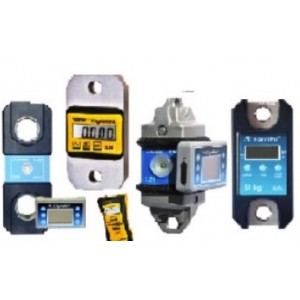
Crane Scales are self-contained weighing
devices designed for use between a load handling machine, such as a crane, forklift,
or hoist, and a load. You hook it up, lift, and instantly view weight on a
digital display, either integral with the Crane Scale or via a wireless
handset.
The main advantage of Crane Scales is their
ease of use: no other equipment necessary in most cases. You hook it up, lift,
and away you go.
We recommend Crane Scales when you need to measure weights of individual loads as part of your business operations. Crane Scales are easy to use, portable, and don't require any technical expertise.
Load Cells are precision devices for weight
measurement, converting force into an electrical signal, which then requires
further equipment for signal processing and display.
This is a more complex system than a crane
scale, and it is. However, there are good reasons for the complexity.
·
They can be used with existing
structures and machinery, which cannot be done with crane scales.
·
Used for continuous monitoring,
not for infrequent use.
· Mainly used for proof load tests, which cannot be done with a crane scale. When you are putting a crane through a proof load test, you want the precision that a load cell can give you, as well as the documentation that can be obtained with a load cell.
Crane scales are a good option when
portability is a concern, as they are easy to move from one location to
another, or from one type of lifting gear to another.
For commercial use, crane scales are a good
option, as they are simple to use for checking the weight of a load before
transportation, scrap metal, etc.
They are accurate to 0.1 to 0.3 percent of
the rated capacity, which is more than enough for commercial use. If you want
to know whether a load is 2.5 tons or 3 tons, a crane scale can do the job for
you.
They are battery-powered, so there's no hassle with cables or batteries. Depending on the type, you can get 20 to 100+ hours of use from a single charge.
Permanent installations can benefit from
load cells. Continuous monitoring of forces in permanent installations such as
bridge cables, overhead cranes, and structural supports require equipment that
can be integrated into these installations.
Data logging and process control require
load cells. If your requirements involve data logging or integration with an
existing system, load cells can help meet these needs.
Research and testing require load cells for
accurate force measurement. We have provided equipment for use in university
engineering departments and testing labs where accurate measurement and data
output capabilities were important.
Load cells often offer greater accuracy than crane scales. Some load cells offer 0.03% accuracy. Whether that accuracy is really important depends upon your specific needs.
The cost of a crane scale is typically less
than that for a load cell system. A good quality crane scale can cost between
£500 and £3,000.
The load cell system can be more expensive
when display and data acquisition equipment is included. The load cell system
can be £2,000 to £10,000+ for similar capacity.
The real question is whether the equipment that you purchase is really going to do what you need. Is the equipment really going to save you money in the long run?
The crane scale is very easy to get up and
running. The battery needs to be charged and attached to your lifting
equipment. That's about it.
Load cells require mounting,
instrumentation connection, system calibration, and possibly data logging. This
is not a task to be performed by a non-technical person.
Who uses the equipment
Anyone can use crane scales. They are simple to use. However, the use of load cell systems may require more extensive training.
For the majority of general lifting
operations where you need to know the weight of the individual load, crane
scales are the obvious solution. They are simple to use, cost-effective, and do
the job you want.
Load cell systems are the solution when you
want to know the weight of the load and the forces implied all the time. They
are the right tool to use when you want more than just a simple weight reading.
If you are occasionally weighing your loads
as an essential part of your operations, want the solution to be portable, and
want the solution to be simple to use, then crane scales are the solution.
If you are looking to install a permanent
solution to your weighing needs, want to connect to a data logging system, want
to perform proof load testing, or want to connect to existing systems, then
load cell systems are the solution.
Our technical team can help you determine
what solution is right for your operations. We have been providing load
monitoring equipment to the industry for over 25 years.
For advice on load monitoring solutions or to discuss your needs, call us on 01384 76961. We have crane scale and load cell systems available in a variety of capacities. We have competitive prices and fast UK delivery.