Lifting Gear Direct
manufacture their own bespoke Jib cranes and mobile gantries, as well as supplying floor cranes / engine hoists, scaffold runway systems and light crane systems as well as aluminium gantry systems. Some crane systems and portable gantry options can be customized to
your needs and have a great range of options to choose from including height
and span. Jib cranes can be wall, column, or floor mounted whilst our scaffold runway systems fit to scaffold towers and ideal on construction sites. Light crane systems can also be tailored to suit your requirements. We have our own team of engineers who can deliver and install your
chosen crane if and when required, with thorough inspections carried out as
necessary when booked in, we endeavour to contact customers when inspections are
due. We also supply other types of crane systems, read on below to find out more.
POA
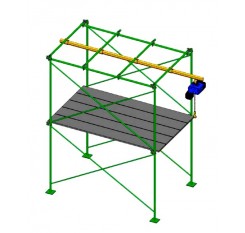
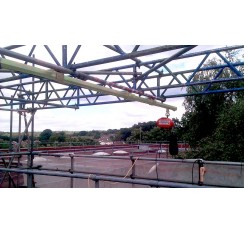
About Scaffold Crane Systems The track used in this scaffold runway crane sys..
POA
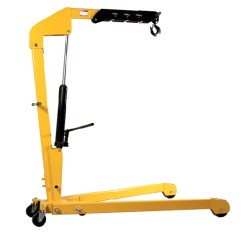
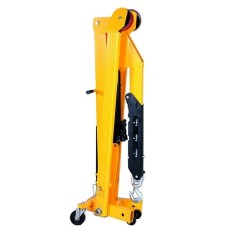
About the Workshop Floor Crane This workshop floor crane is the NDJ10 model a..
£2,002.85
125kg Under Braced Swing Jib Benefits Buying an under braced swing Jib from Lif..
£2,076.45
Benefits of our 250kg Under Braced Swing Jib There are lots of reasons to inves..
£2,325.14
500kg Under Braced Swing Jib Capabilities As well as these under braced jibs we..
£2,555.11
About the 1000kg Swing Jib with Under Bracing If you need optimal lifting heigh..
POA
Whatever your desired specifications, we can adapt the design and build a ..
POA
We can customise this crane with optional features, build it and install it on-s..
POA
Benefits of our 125kg Over Braced Swing Jib Crane This crane is just one of a n..
POA
Floor and column mounting are available with arm radii up to 5 metres and wall m..
POA
500kg Over Braced Jib Crane - Key Features 500kg SWL over braced jib crane S..
POA
This particular model has a safe working load of 1000kg, so you can easily..

Please Note: We do not hire out our gantries and cranes, they are made to measure.
There are many different types of crane systems available in today's market. Choosing the correct crane for your needs can be confusing so we have outlined some of the key facts about some of the different lifting crane options that Lifting Gear Direct can help with.
These are a more recent innovation which enable you to incorporate a runway crane into your scaffolding tower. The steel runway beam clamps to scaffold poles for strength and security. They can be fitted anywhere on your scaffolding to provide a crane to lift, lower and move loads across the beam. A beam trolley and hoisting device will be required for full functionality of the scaffold runway system.
Our modular light crane systems are coming soon.
Out gantry systems are custom made to order in our own factory to ensure you get the correct size for your lifting application.
Lifting Gear Direct manufacture bespoke crane gantry systems as well as Jib cranes.
Cranes come in a wide variety of designs, mobile gantry cranes, Jib cranes, overhead gantry crane systems, lightweight aluminium lifting gantries and engine cranes/floor cranes. Find out more at Lifting Gear Direct.
A mobile gantry is a steel framework consisting of two 'A' frames and a cross beam. The A frames incorporate heavy duty castors in order to move the gantry frame around the workplace to where the load needs to be lifted.
Our custom built gantry systems can handle top loads up to 5000kg, our smallest model can handle 500kg and we offer 1000kg, 2000kg and 3000kg models too.
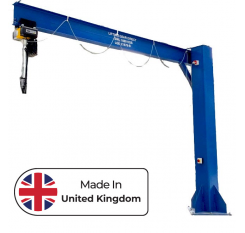
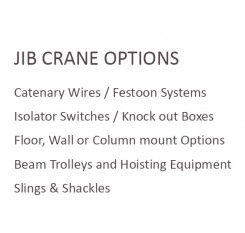
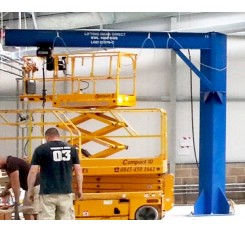
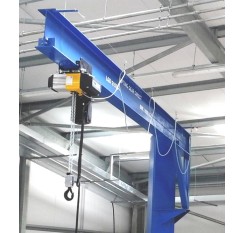
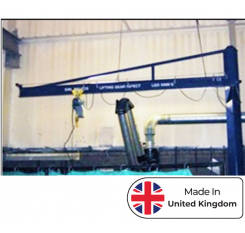
A Jib crane consists of a cantilevered jib arm or boom, a steel beam which normally rotates to facilitate lifting and moving loads within a specific area. They can be floor mounted on a steel column, wall mounted or mounted to an existing building column. Underbraced options are the most popular but over braced options are available. They are commonly used with a beam trolley and hoist.
Aluminium lifting gantries are lightweight cranes which can generally be broken down into three main parts, making them easy to transport and so great for on site lifting tasks. The smallest and easiest to use is the Rapide with top lifting capacities of 500kg. The largest custom models can handle up to 5000kg loads.
An engine crane, also called a floor crane, engine hoist or workshop crane is a small crane with legs that slide under a vehicle and a cantilever arm which extends over the engine bay. They facilitate the lifting out and installation of a vehicles engine. Typically used in car repair garages.
Yes it can. The latest scaffold runway system incorporates a steel beam which clamps onto scaffold poles. Then you can fit a trolley and hoist system to lift, lower and move your loads with ease.